Posts
New interactive …
Books as Knowledge Reservoirs is an interactive Jupyter Book that introduces the full pipeline of distant reading — from OCR and data cleaning through keyword analysis to network visualization — while examining the biases and pitfalls that come with computational approaches to text. It grew out of a …
New paper: Evolution and …
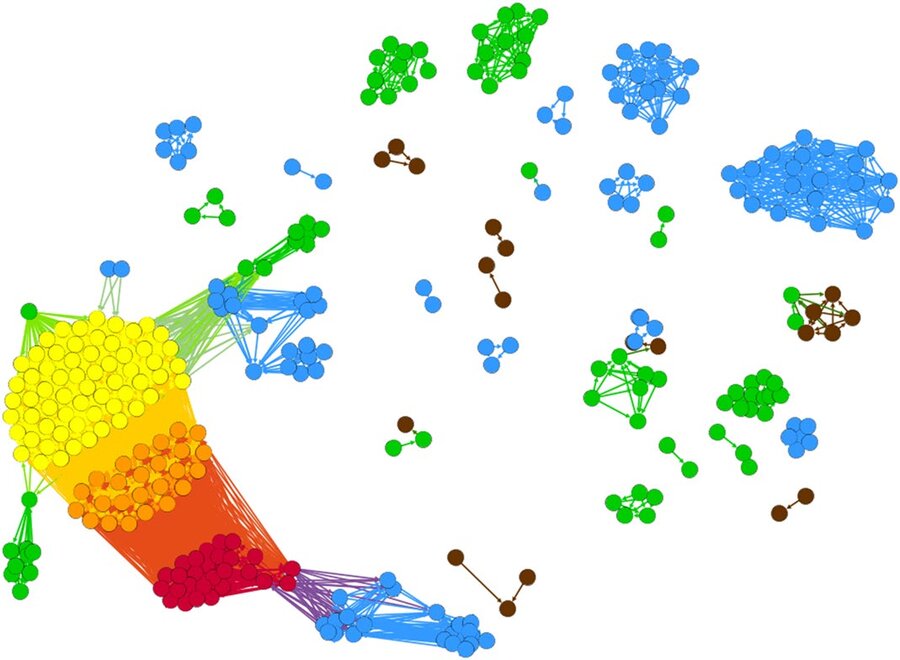
Astronomy teaching changed substantially across two centuries of European universities. This paper analyzes more than 350 editions of the Sphaera Corpus — textbooks used to teach astronomy from the late fifteenth to the mid-seventeenth century — by building a six-layer multiplex network from the …
New blog post: Simply …
A routine Django version upgrade, a chain of dependency and server updates, and an unplanned trip to the server room to recover SSH access — this post for the DHTech Blog is a candid field report on the operational side of keeping research software infrastructure running, and what it took to track …
New paper: The Emergence …
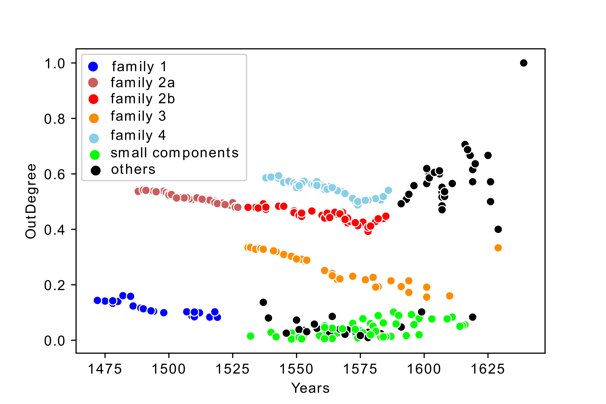
Based on semantic, content-related data from 359 printed editions of astronomy textbooks used to teach cosmology at European universities between 1472 and 1650, this paper investigates how new epistemic communities emerge. Editions are grouped into families that share content, showing how these …
New white paper: The DH …
At the DH 2019 conference, a group of people who broadly identify as Digital Humanities Research Software Engineers came together for a workshop. This white paper is the outcome: an attempt to draw attention to issues this community observes and experiences day to day, and an open invitation for …
New conference paper: I'm …
Digital humanities projects rely on someone actually building the tool — yet that role, and the people who fill it, often sit awkwardly between “developer” and “researcher” in how DH projects are staffed, credited, and understood. This abstract, presented at DH2019 in …