Posts
Dh Tech Blog Post About …
I wrote a short piece about my career from Physics to Digital Humanities for the CareerStories series of DHtech. Read it at the source: at DHtech.
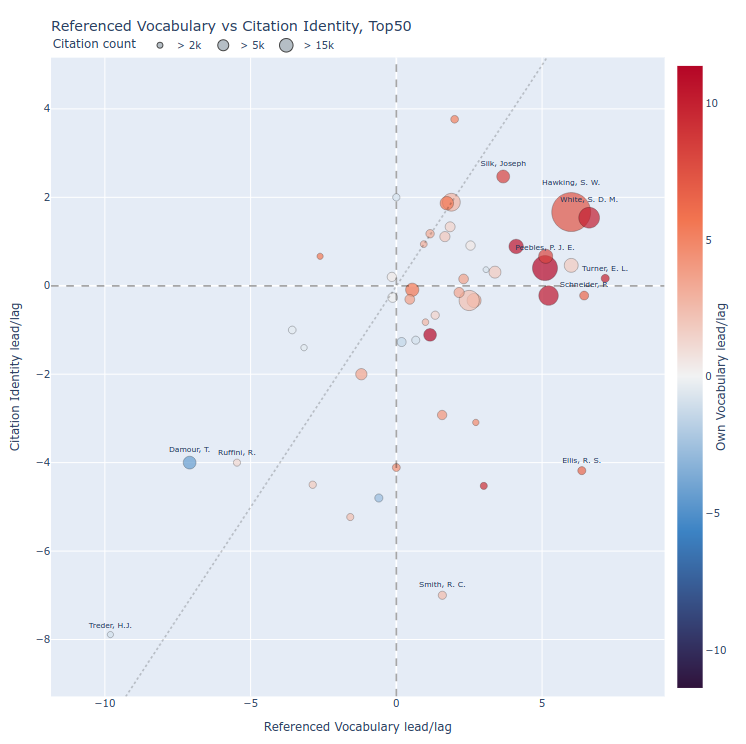
New preprint: Tracing …
In this preprint we develop a methodological framework to trace individual vs field changes for authors from the field of general relativity and gravitiation. By comparing 50 author trajectories in the four measures with a background corpus we are able to paint a diverse picture of how the same …
Reading guide: …
Several of my publications on agent-based modeling cover the same ground from different sides. This is the order I would read them in, starting with a hands-on lesson on building a first simulation of Republic of Letters correspondence in Python.
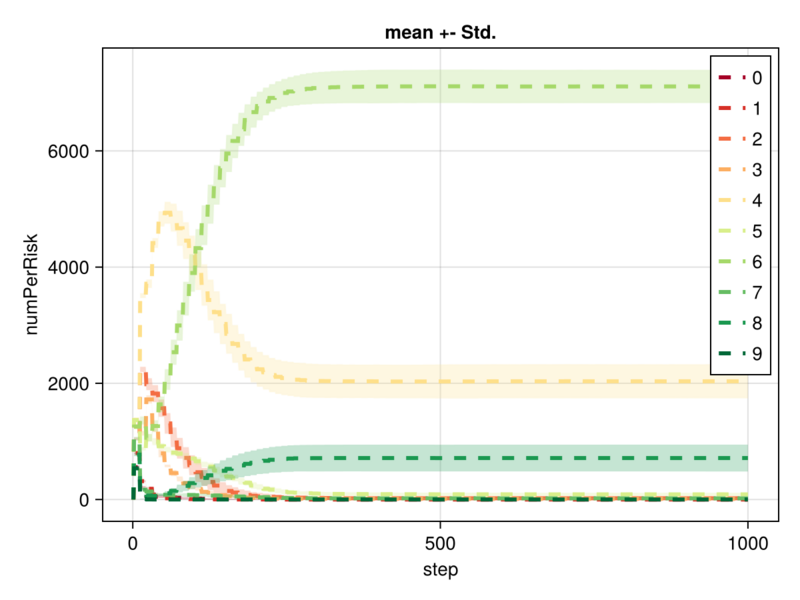
New software: HawkDove.jl
HawkDove.jl simulates a spatial Hawk-Dove game in which players differ in their attitude toward risk. Agents play against their neighbours, updating their strategy each round and, periodically, adapting their risk attitude toward that of more successful neighbours. The long term emergent behavioir …
New: Participating in the …
DHTech’s community code review process — described in Code review in digital humanities — pairs researchers who submit a piece of code with reviewers and a facilitator, working around the fact that most DH developers work alone. I’ve taken part on both sides of that pairing: submitting …
New chapter: Agent-Based …
Agent-based models let researchers explore possible pasts and possible futures side by side. This chapter takes stock of what such models can offer historians and policymakers working with incomplete evidence, weighing their limitations as carefully as their possibilities.