Hi, my name is

Malte Vogl.

Software architect and researcher working on the history and dynamics of knowledge

I work as a software architect and developer at the Berlin-Brandenburg Academy of Sciences and Humanities (BBAW) in Berlin, alongside an ongoing guest researcher affiliation with the Max Planck Institute of Geoanthropology in Jena. My work combines network analysis, agent-based modeling, and natural language processing to study how scientific knowledge forms, spreads, and changes over time.

Malte Vogl profile image

About Me

Malte Vogl profile picture

I studied physics at the Technische Universität Berlin and, on exchange, at the University of Nairobi, Kenya. In 2013 I completed my PhD (Dr. rer. nat.) with a dissertation on collective and critical effects in bosonic transport — quantum effects in heat transport at atomic scales — followed by a postdoctoral fellowship at the Max Planck Institute for the Physics of Complex Systems in Dresden.

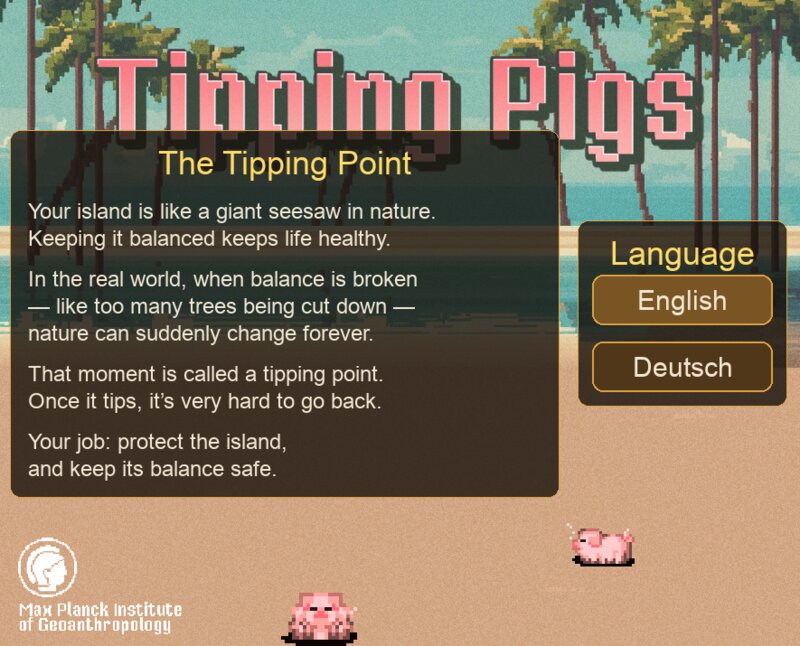
From 2015 I worked as a freelance programmer, developing a prototype tangible musical interface based on RFID technology. In 2016 I joined the Max Planck Institute for the History of Science in Berlin as a postdoctoral researcher and research software engineer, working with the Cluster of Excellence Topoi at Humboldt-Universität zu Berlin on research data infrastructure. I subsequently moved into the research program History of the Max Planck Society, working on large-scale analysis of archival data, before becoming postdoc and then principal investigator of the BMBF-funded ModelSEN project on socio-epistemic networks. From 2023 I was a senior research fellow at the Max Planck Institute of Geoanthropology, working on modeling the evolution of knowledge in the Anthropocene; I remain affiliated there as a guest researcher. That work also has a public-facing side: Tipping Pigs is a serious game I built about ecological tipping points, communicating the same kind of cascading, hard-to-reverse dynamics through play. Since September 2026 I work as a software architect and developer at the Berlin-Brandenburg Academy of Sciences and Humanities (BBAW) in Berlin in the TELOTA project.

ModelSEN developed the socio-epistemic networks (SEN) framework: a way of formally describing historical knowledge systems along three interconnected layers — social, semiotic (material), and semantic — so that network studies from different historical case studies become comparable. Methodologically, it combines social network analysis, diffusion theory, and graph theory with ontology-based semantic modeling, grounded in case studies from the history of science. Software built along the way includes CitationNet, an interactive 3D visualization of citation networks, semanticlayertools, a Python toolkit for building the framework’s network layers from any structured text corpus, and RDMHelper, a set of tools for research data management.

I am a member of DHTech, the German Digital Humanities association DHd, and the Deutsche Physikalische Gesellschaft. Within DHTech I take part in the community code review process, both submitting my own code for review and reviewing others'.

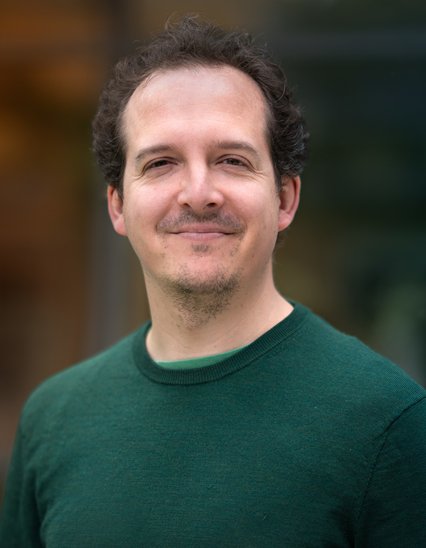
Portrait: © Hans Sell, Max Planck Institute of Geoanthropology.

Methods and tools I work with:
  • Python
  • Network analysis
  • Agent-based modeling
  • Natural language processing / LLMs
  • Historical data analysis
  • Research software engineering
Experience

September 2026 – present
Software architecture and development, alongside an ongoing guest research affiliation with the Max Planck Institute of Geoanthropology.
May 2023 – present
Research on modeling the evolution of knowledge in the Anthropocene, in the Structural Changes of the Technosphere department. Senior research fellow until September 2026.
Principal Investigator, ModelSEN - Max Planck Institute for the History of Science
2021 – 2024
Led the BMBF-funded ModelSEN project, developing the socio-epistemic networks (SEN) framework for the computational study of historical knowledge systems.
Postdoctoral Researcher & Research Software Engineer
2016 – 2021
Worked with the Cluster of Excellence Topoi (Humboldt-Universität zu Berlin) on research data infrastructure, then moved into the research program History of the Max Planck Society for large-scale analysis of archival data.
Founder & Developer - QuantOPhone
2015 – 2016
Freelance programmer; developed a prototype tangible musical interface based on RFID technology.
Research on quantum effects in driven many-body systems.

Education

2009 – 2013
PhD in Physics (Dr. rer. nat.)
Technische Universität Berlin
Dissertation: Collective and critical effects in bosonic transport — on quantum effects in heat transport at atomic scales.
2002 – 2009
Diplom in Physics
Technische Universität Berlin
2005 – 2006
Physics exchange
University of Nairobi

Software

semanticlayertools
Python Network Analysis ModelSEN
semanticlayertools
Python toolkit for building social, semiotic, and semantic network layers under the socio-epistemic networks (SEN) framework, from any structured corpus with author, time, and text metadata.
SciCom
Python Agent-Based Modeling ModelSEN
SciCom
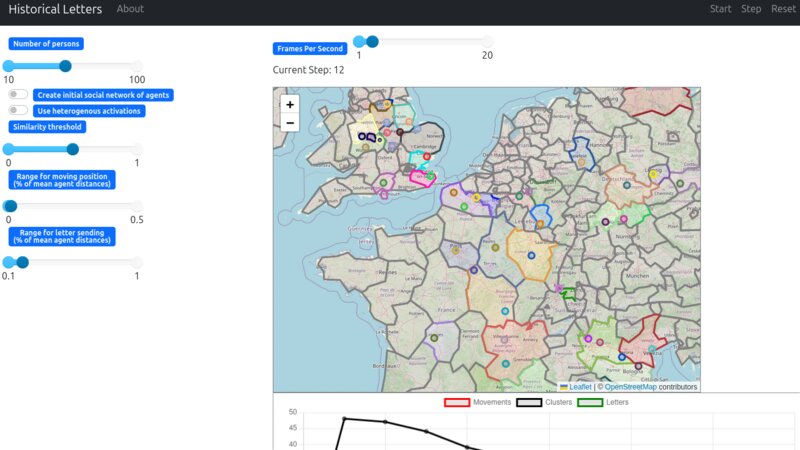
Agent-based models simulating aspects of scientific communication, including a reconstruction of communication and archiving processes in the early modern Republic of Letters.
corpussearch
Python NLP
corpussearch
Tools for loading, indexing, and analyzing large text corpora in Python.
convert2geojson
Python GIS
convert2geojson
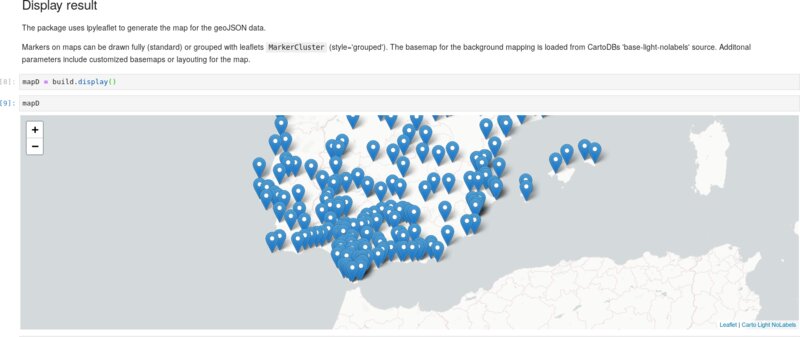
Utility for converting tabular datasets into GeoJSON, for mapping and geographic visualization of historical or research data.
SeafileContentManager
Python Jupyter
SeafileContentManager
A Jupyter Notebook/Lab content manager backed by Seafile's web API, for working with notebooks stored on a Seafile server.
CitationNet
Python JavaScript Network Analysis ModelSEN
CitationNet
An interactive 3D visualization of citation and reference networks for any DOI or OpenAlex ID, built for the ModelSEN project — time runs along one axis, citation frequency along the other. A FastAPI app with a companion JS/TypeScript package for the 3D graph itself.
Tipping Pigs 3
Python Pygame Serious Game
Tipping Pigs 3
A pygame-based serious game about resource management and ecological tipping points: keep a Polynesian island's pig herd and environment in balance before the system tips past the point of recovery. Bilingual (English/German), made at the Max Planck Institute of Geoanthropology.
RDMHelper
Python Research Data Management ModelSEN
RDMHelper
A collection of small tools for research data management, with integrations for the Seafile and Nextcloud cloud storage systems used to upload, organize, search, and manage access to research data.
HawkDove.jl
Julia Agent-Based Modeling unpublished
HawkDove.jl
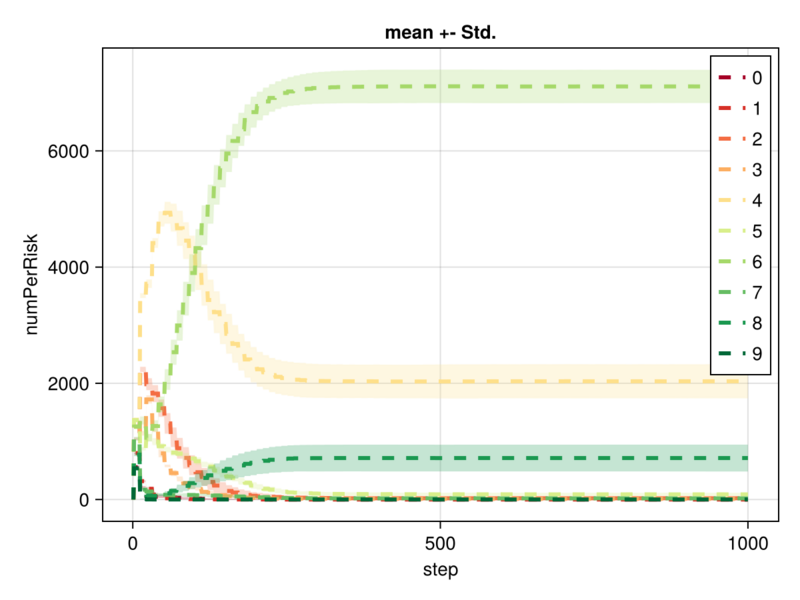
A Julia agent-based model of a spatial Hawk-Dove game, where players update both their playing strategy and their risk attitude based on their neighbours' success. Built on the Vahana.jl framework; a rewrite of a Python/Mesa model from Princeton's SimulatingRisk. Unpublished, ongoing work.

Get in Touch

Feel free to reach out by email, or find me on GitHub, Mastodon, and ORCID above.